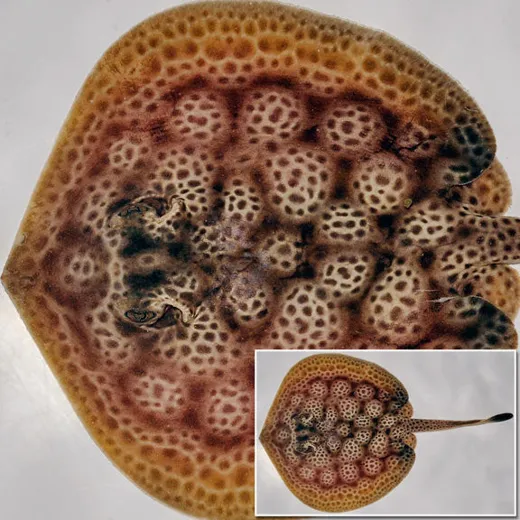
Round Stingray EXPERT ONLY
The Round Stingray is a bottom dwelling fish, with a tan body with dark brown spots. The tail spine is venomous, but is only used for protection. Caution should be taken when netting it, or when it is not visible and maintenance is performed in the aquarium.
The Round Stingray prefers cooler water temperatures and should only be kept by an experienced hobbyist. A 180 gallon aquarium with at least a two foot width from front to back is necessary for an adult. It likes to cover itself on the soft substrate as camouflage. A coarser substrate will scratch its abdomen and could cause an infection. It should never be exposed to copper-based medications. It will eat any crustacean or mollusk in the aquarium.
Feeding may be difficult in the beginning. When first introduced, it may take time to become active and start feeding.
| Key Features |
|---|
| Body Color: Tan with dark brown spots |
| Water Temperature: Cooler water preferred |
| Minimum Tank Size: 180 gallons with two-foot width |
| Substrate: Soft substrate only; avoid coarse materials |
| Medications: Never exposed to copper-based treatments |
| Diet: Crustaceans and mollusks |
FAQ
What kind of substrate is safe for the Round Stingray?
A soft substrate is recommended. A coarser substrate can scratch the fish’s abdomen and lead to infection.
Can the Round Stingray be kept with other fish?
It is not recommended to keep the Round Stingray with other fish due to its predatory nature and specific needs. It should be housed in a large, stable environment with minimal stressors.
How long does it take for the Round Stingray to start feeding after introduction?
Feeding may take several weeks. The fish may initially be inactive and require time to adjust to the new environment.
Jacob Wright –
After years of keeping marine fish, I finally added a Round Stingray to my 180-gallon tank. It’s quiet and mostly hides under the substrate. I’ve had to be careful when cleaning, and I now use only soft sand. It eats small crustaceans and has not shown any signs of stress. A true challenge, but rewarding for experienced aquarists.
Christopher Hardacre –
This fish is not for beginners. I had to research extensively before adding it. The tank needs to be large and stable. It hides well and only comes out to feed. I avoid copper treatments completely. It’s a great addition to a mature aquarium.
Steven Alsop –
I kept it for three months and noticed it was very shy. Feeding was slow at first. I used only soft gravel and kept water temperature low. It seems healthy now, but I’m not sure it’s a good fit for smaller tanks.