Ruby Red Scat Fish – LiveAquaria
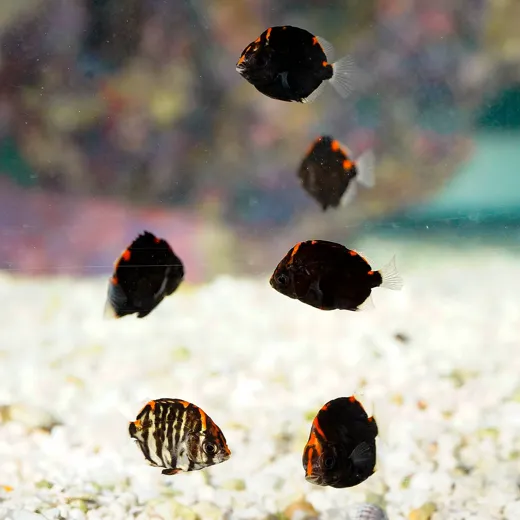
The Ruby Red Scat fish is a popular brackish water aquarium fish native to the Indo-Pacific region. It is a hardy schooling fish that requires a minimum tank size of 125 gallons.
These fish have a uniquely shaped body that is either silver or dark with black stripes and variable amounts of red. As they mature, many of these features fade.
Ruby Red Scats are opportunistic omnivores. Their diet shifts to herbivorous as they age, favoring filamentous algae and plant material. A varied diet including vegetables and algae-based foods is recommended.
| Specifications |
|---|
| Species: Ruby Red Scat |
| Water Type: Brackish |
| Minimum Tank Size: 125 gallons |
| Behavior: Schooling, hardy |
| Diet: Omnivore (shifts to herbivore with age) |
FAQ
What is the ideal tank size for Ruby Red Scat fish?
The minimum recommended tank size is 125 gallons to ensure proper space and water stability for a school of Ruby Red Scat fish.
How does the appearance of Ruby Red Scat change as they mature?
Young Ruby Red Scats have a silver or dark body with black stripes and visible red markings. As they mature, these red features often fade, and the body color becomes more uniform.
What type of diet should I provide for mature Ruby Red Scats?
Mature Ruby Red Scats are herbivorous and should be fed a varied diet including filamentous algae, plant matter, and vegetable-based foods.



Boris Howard –
I kept a school of Ruby Red Scats in a 150-gallon brackish tank. They are active and peaceful, forming a natural school. After a few weeks, the red markings faded, which is normal. I feed them algae wafers and blanched vegetables daily. They thrive in the setup.
Adrian Mills –
The fish are hardy and easy to maintain. I introduced all of them at once, which helped them establish a stable group. They eat well on a mix of algae and plant-based foods. The color change over time is subtle but noticeable.
Stephen Chapman –
Great addition to a brackish tank. They don’t stress the water parameters and are active without being aggressive. I’ve had them for six months and they’re still healthy and feeding regularly.