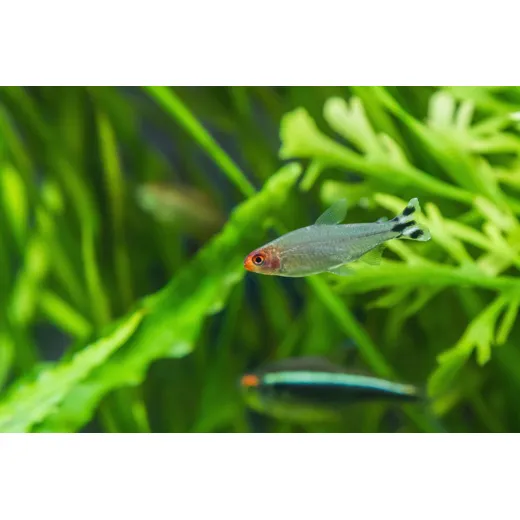
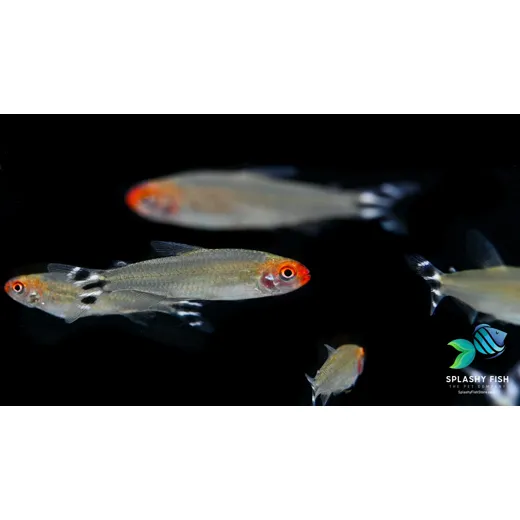
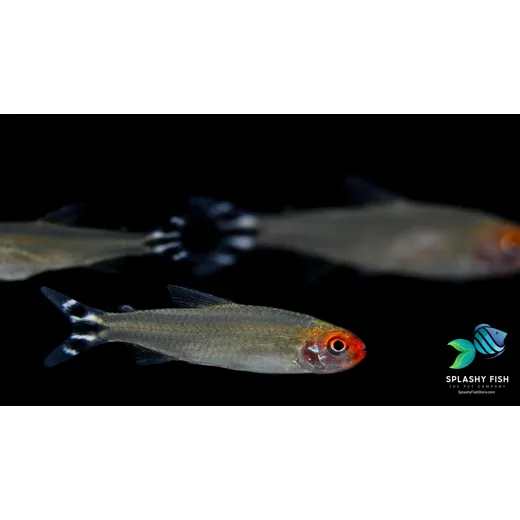
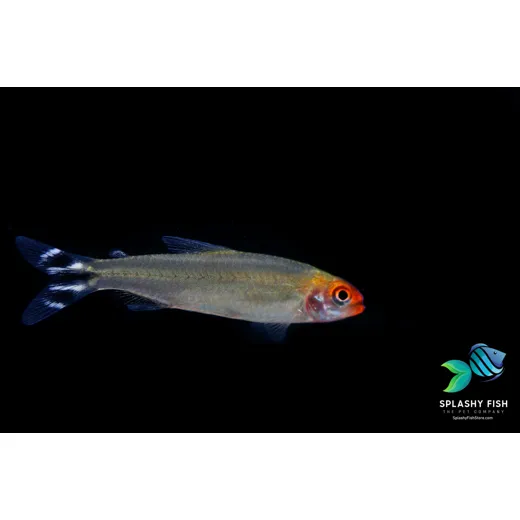
Rummy Nose Tetra (Petitella bleheri)
Instantly recognizable by its bright red nose, silver body, and bold black-and-white striped tail, the Rummy Nose Tetra creates breathtaking synchronized movement when kept in groups. Few fish display schooling behavior as tight and mesmerizing as Rummy Nose Tetras, making them a top choice for planted and aquascaped aquariums.
Native to the Amazon River Basin, these fish inhabit soft, warm, slow-moving blackwater streams rich in plants and leaf litter.
| Specifications |
|---|
| Scientific Name: Petitella bleheri |
| Common Name: Rummy Nose Tetra |
| Size: 2.5 inches (6.4 cm) |
| Temperature: 72–82°F (22–28°C) |
| Water pH: 5.5–6.5 |
| Hardness: Soft to very soft |
| Group Size: 6 or more for optimal schooling behavior |
FAQ
What is the ideal tank size for Rummy Nose Tetras?
A minimum of 20 gallons is recommended to accommodate their schooling behavior and provide enough space for natural movement.
Are Rummy Nose Tetras compatible with other fish species?
They are generally peaceful and work well with other non-aggressive community fish, such as neon tetras and dwarf corydoras, in a well-maintained aquarium.
What type of substrate and plants do they prefer?
They thrive in soft substrates like sand and prefer planted tanks with dense vegetation and leaf litter to mimic their natural Amazon habitat.



Diane Tucker –
I’ve had a group of Rummy Nose Tetras for six months now. They’re incredibly active and form a stunning school. The red noses stand out in the dark, leafy background. Very easy to care for as long as the water parameters are stable.
Sam Dickens –
The fish are lively and add a lot of visual interest to my planted tank. I keep them in a 30-gallon tank with java fern and anubis plants. They swim together in tight formation, which is very satisfying to watch.
Fiona North –
I was skeptical at first, but after adding a group of six, the tank became much more dynamic. The schooling behavior is mesmerizing and they don’t stress other fish in the tank.