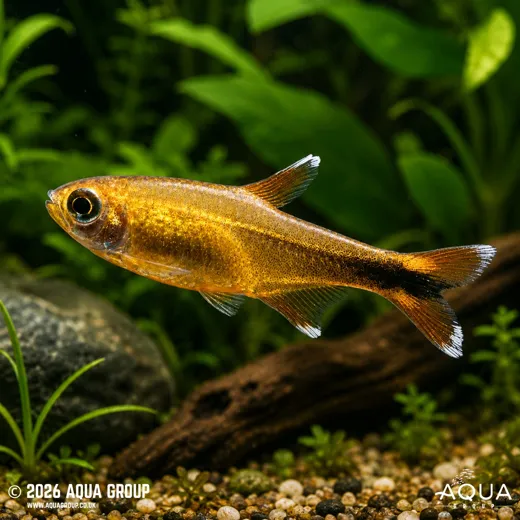
Silvertip Tetra (Hasemania nana)
The Silvertip Tetra is a lively and attractive South American shoaling fish, loved for its warm copper-gold body colour, black tail marking and bright white-silver tips on the fins. Also known as the Silver Tip Tetra or Copper Tetra, this species is more active and confident than many smaller tetras, making it a great choice for a mature community aquarium with open swimming space, planted areas and similarly robust peaceful tank mates.
Common Name
Silvertip Tetra. Also commonly referred to as the Silver Tip Tetra, Silver-Tipped Tetra, Copper Tetra or Tipped Tetra.
Scientific Name (Latin)
Hasemania nana
Maximum Size
Around 3.5–5 cm in captivity.
| Feature | Detail |
|---|---|
| Origin | South America |
| Behavior | Shoaling, active, peaceful |
| Water Conditions | Warm, soft to moderately hard water, pH 6.0–7.5 |
| Temperature | 22–26°C |
| Compatibility | Peaceful community fish; avoid aggressive or very fast-moving species |
FAQ
What is the typical size of a Silvertip Tetra in an aquarium?
Around 3.5–5 cm in captivity.
What kind of tank environment does the Silvertip Tetra prefer?
A mature community aquarium with open swimming space, planted areas, and similarly robust peaceful tank mates.
Is the Silvertip Tetra suitable for beginners?
It is best suited for experienced aquarists who maintain a stable environment and have a mature community setup.

Alan Payne –
The Silvertip Tetras are very active and add a lot of visual interest to the tank. Their copper-gold body and silver tips stand out well in a planted community. They swim in groups and seem to enjoy the open space. I’ve kept them with other peaceful tetras and they coexist well.
Joe Wallace –
These fish are vibrant and energetic. The coloration is striking, especially the white-silver tips on the fins. They do need a bit of space to swim freely, so I made sure my tank had open areas and plenty of plants.
Christopher Graham –
I’ve had them for six months now and they’re still active and healthy. They form a tight shoal and are not aggressive. The black tail marking is clearly visible and adds to their charm.