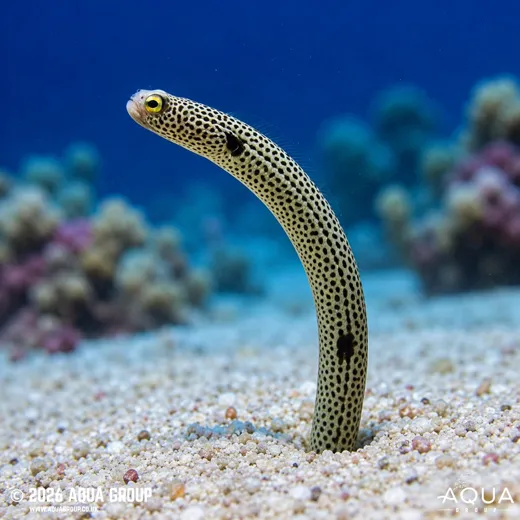
Spotted Garden Eel – Heteroconger hassi
The Spotted Garden Eel, Heteroconger hassi, is a fascinating marine eel with a slender white body, black spotting and a unique burrow-dwelling lifestyle. Also known as Hass’s Garden Eel or the Spotted Garden-eel, this Indo-Pacific species lives in colonies on sandy reef slopes, with each eel anchored in its own burrow while facing into the current to catch passing zooplankton. It is peaceful and reef safe, but it is a specialist aquarium fish that requires a deep sand bed, frequent plankton-style feeding and a calm, species-appropriate setup.
Common Name
Spotted Garden Eel, Spotted Garden-eel, Garden Eel, Hass’s Garden Eel.
Scientific Name (Latin)
Heteroconger hassi
Key Features
| Feature | Detail |
|---|---|
| Body Color | Slender white body with black spotting |
| Lifestyle | Burrow-dwelling, faces current to catch zooplankton |
| Habitat | Indo-Pacific sandy reef slopes |
| Behavior | Peaceful, reef-safe, social in colonies |
| Requirements | Deep sand bed, plankton-style feeding, calm environment |
FAQ
What kind of environment does the Spotted Garden Eel need in an aquarium?
The Spotted Garden Eel requires a deep sand bed, a calm environment, and frequent feeding of plankton-style food. It thrives in a well-maintained marine setup with stable water parameters and strong water flow to mimic its natural habitat.
Is the Spotted Garden Eel safe to keep with other reef fish?
Yes, the Spotted Garden Eel is peaceful and considered reef-safe. It does not pose a threat to other fish and is suitable for community reef tanks when properly housed.
How often should I feed the Spotted Garden Eel?
It should be fed regularly with plankton-style foods, such as copepods or brine shrimp, several times a day to maintain its health and activity.
Victor Churchill –
The Spotted Garden Eel is a unique and fascinating addition to my reef tank. After setting up a deep sand bed and adjusting the flow, the eel settled into its burrow and began feeding naturally. It’s quiet and doesn’t stress other fish. Only requires small amounts of planktonic food daily.
Diana Morrison –
I was initially unsure about keeping a garden eel, but it adapted well to the tank. The sand bed is essential—without it, the eel won’t burrow properly. Feeding it small amounts of copepods daily keeps it active and healthy.
Connor Wilkins –
This eel is a true highlight in my aquarium. It’s calm, doesn’t move much, and looks very natural. I’ve observed it facing the current and catching tiny organisms. The setup took some time, but the result is worth it.