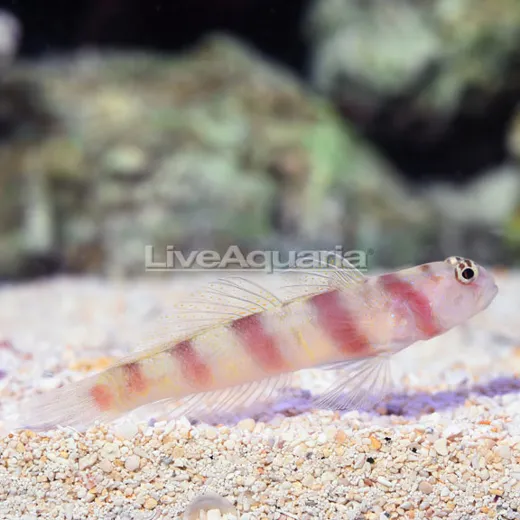
Steinitz Goby – LiveAquaria
The Steinitz Goby, also known as Steinitz’ Prawn Goby, comes from the rubble zones of the reefs of the Indian Ocean. Like other watchman gobies, they have an elongated body with large eyes. The bodies of these gobies are white with brown vertical bands. The entire body is also spotted with small blue spots that intensify with mood. These gobies may form a symbiotic relationship with a pistol shrimp.
It should be kept in a 10-gallon or larger aquarium with a sand-covered bottom to make burrows in. It prefers to have peaceful tank mates and plenty of hiding places. Small groups or pairs tend to do better in an aquarium, but need to be introduced to the tank simultaneously.
Fairly hardy and highly disease resistant, the Steinitz Goby has been known to spawn successfully in captivity.
| Specifications |
|---|
| Species: Steinitz Goby (Prawn Goby) |
| Origin: Indian Ocean reef rubble zones |
| Body Color: White with brown vertical bands |
| Spot Pattern: Small blue spots, visible with mood changes |
| Behavior: Peaceful, forms burrows, may associate with pistol shrimp |
| Minimum Tank Size: 10 gallons with sand substrate |
| Group Size: Best in pairs or small groups introduced together |
FAQ
What kind of tank setup is best for the Steinitz Goby?
A 10-gallon or larger aquarium with a sand-covered bottom is ideal to allow the Steinitz Goby to dig and create burrows. Include plenty of hiding spots and maintain a peaceful environment.
Can Steinitz Gobies live with other fish?
Yes, they prefer peaceful tank mates. Avoid aggressive or fast-moving species. They do best with calm, non-predatory fish that share similar water conditions.
Do Steinitz Gobies form relationships with other marine creatures?
They may form a symbiotic relationship with pistol shrimp, where the goby helps protect the shrimp from predators.

Zoe Blake –
The Steinitz Goby is a calm and active fish that quickly adapted to our 20-gallon tank. It digs into the sand and seems happy with the hiding spots we provided. The blue spots on its body change color when it’s active, which is fascinating to watch. We’ve had it for three months and it’s still healthy and active.
Victor Langdon –
We introduced a pair of Steinitz Gobies at the same time and they’ve been getting along well. The tank has sand, and they’ve made burrows. They don’t seem to stress with other peaceful fish like clown loaches. The blue spots are noticeable when they’re excited or hiding.
Sebastian Marshall –
Easy to care for and very resilient. We kept them in a 15-gallon tank with sand and plenty of caves. They’ve been active and spawning successfully. The color changes are subtle but noticeable, especially during feeding times.