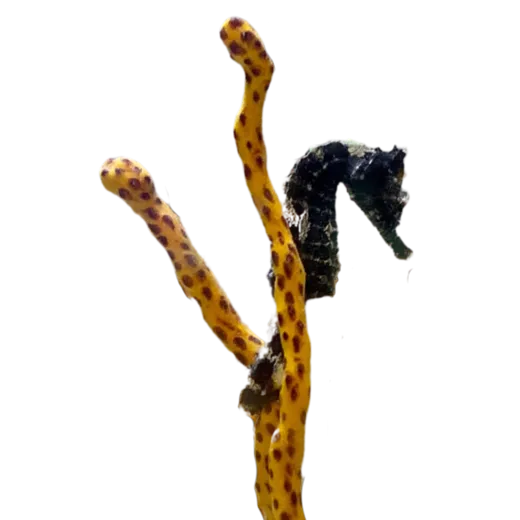
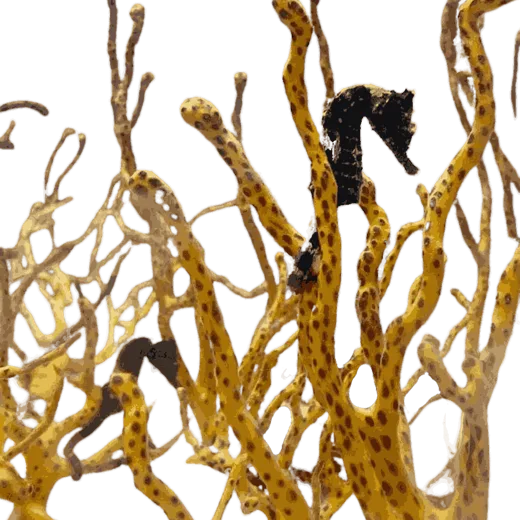
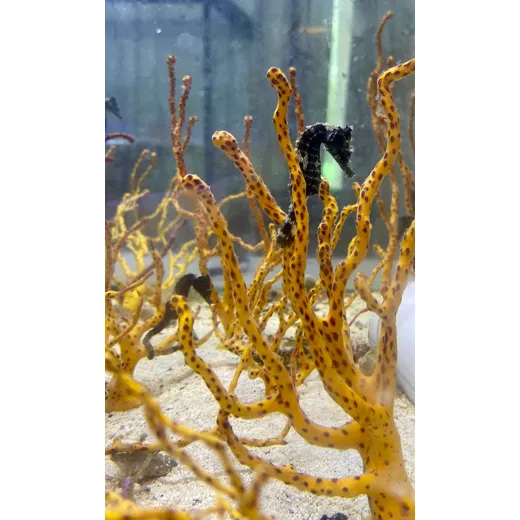
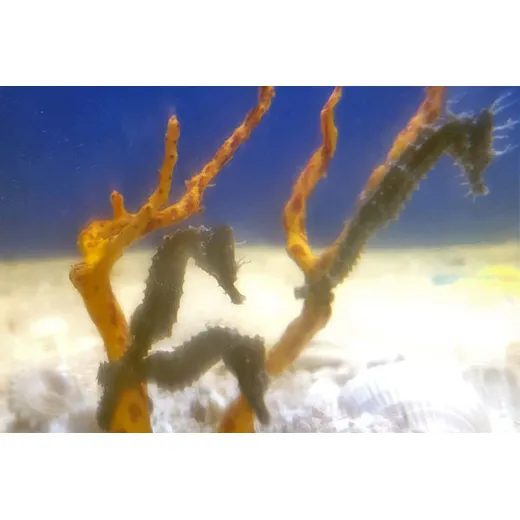
Tank Raised Seahorse (juvenile – not sexed)
The Lined Seahorse, Hippocampus erectus, is considered by many hobbyists to be the most attractive of all the seahorses. These are young and the size is about 2-3 inches. The coloration of these tank raised seahorses ranges from shades of black, to gray to brown. Their coloration may change in the aquarium, and is highly dependent on the colors of its environment. As they mature and become ready to mate, the male lined seahorse will dance around, show off his pouch, and may have color changes. If the female is interested, they will tangle tails and dance as she deposits up to 600 eggs in his pouch. It usually takes about 2 weeks, then the male will birth as many as 50 to 400 babies.
| Species | Hippocampus erectus |
|---|---|
| Age | Juvenile |
| Size | 2-3 inches |
| Coloration | Black, gray, brown (may vary with environment) |
| Breeding Behavior | Males dance, show pouch; females deposit up to 600 eggs; birth occurs after 2 weeks with 50–400 offspring |
FAQ
What is the typical size of these seahorses?
The seahorses are juvenile and measure about 2 to 3 inches in length.
How does the color of the seahorse change over time?
The coloration may change in the aquarium and is highly dependent on the colors of the surrounding environment.
Do these seahorses reproduce in the tank?
Yes, when mature, males and females engage in mating behavior, with the female depositing up to 600 eggs into the male’s pouch. After about two weeks, the male gives birth to between 50 and 400 offspring.
Zoe Graham –
The seahorse arrived healthy and active. It has been in my tank for two months and shows interesting behaviors like tail dancing. The color has changed slightly over time, matching the tank decor. I’m impressed with how it adapts to the environment.
Paul Duncan –
Great addition to my saltwater setup. The seahorse is small but very lively. I noticed it interacts with other fish and shows signs of mating behavior. It’s a unique and engaging pet.
Phil Black –
I bought this as a beginner-friendly marine species. The seahorse is calm and active, and it has started showing tail movements that suggest it’s ready to breed. The color has deepened over time, which I find very appealing.