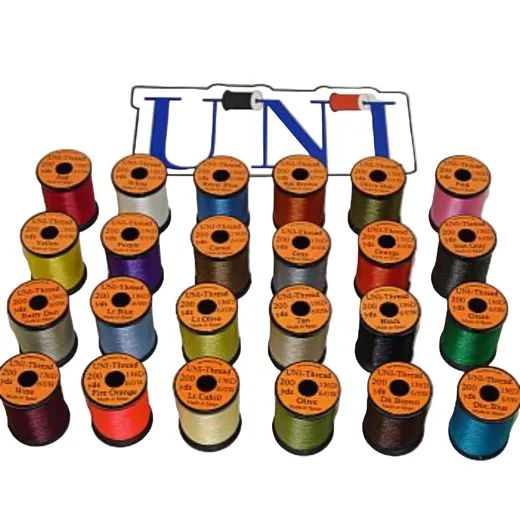
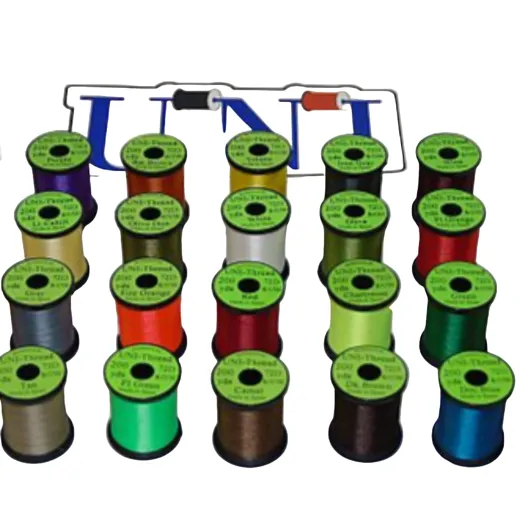
UNI Standard Fly Tying Thread
UNI Standard Fly Tying Thread has long been a staple on the tier’s bench. Available in two sizes, 6/0 and 8/0, and a wide variety of colors to match the hatch.
Product Specifications
| Size | Denier | Color Options | Length |
|---|---|---|---|
| 6/0 | 136 | 25 colors | 200yd |
| 8/0 | 72 | 25 colors | 200yd |
6/0 UNI-Thread is a general fly-tying thread made of continuous polyester filaments. It offers a wide range of twenty-five colors to meet virtually all fly-tying needs. The thread ties flat on the hook and is slightly bonded for consistent performance.
8/0 UNI-Thread is widely favored by fly tiers worldwide for its exceptional strength relative to its diameter. Also made from continuous polyester filaments, it provides reliable durability in fine fly construction.
FAQ
What is the difference between 6/0 and 8/0 UNI Thread?
The 6/0 thread has a higher denier (136) and is suitable for general fly tying with a wider range of color options. The 8/0 thread has a lower denier (72) but is known for its strength relative to its diameter, making it ideal for fine, durable fly construction.
Is the thread strong and durable?
Yes, both sizes are made from continuous polyester filaments and are noted for their strength. The 8/0 thread is especially strong for its diameter, and the slightly bonded construction ensures it ties flat on the hook.
How many colors are available?
Twenty-five colors are available for both 6/0 and 8/0 sizes, allowing users to match the hatch and suit various fly patterns.
Sophie Randall –
I’ve used both 6/0 and 8/0 threads for years. The 8/0 is especially strong and holds well in delicate patterns. The colors match perfectly with my hatch, and the thread ties flat without fraying.
Jack Wright –
Great quality and consistent performance. The 6/0 is reliable for general tying, and the 8/0 is perfect for fine hooks. I’ve used it in multiple fly patterns with no issues.
Adam Slater –
The thread is smooth and easy to work with. I appreciate the wide color range. The 8/0 feels a bit tighter but holds up well in wet conditions.