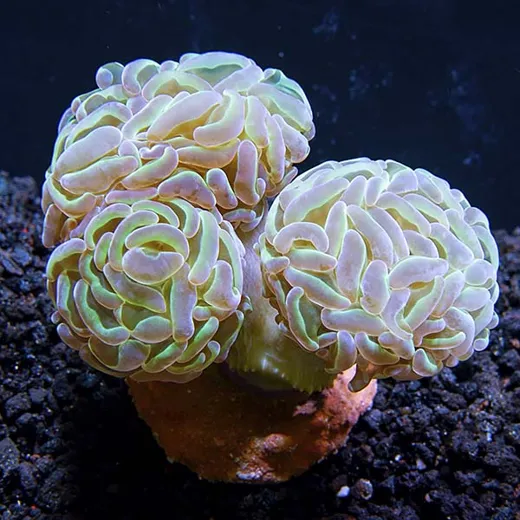
USA Aquacultured Bicolor Hammer Coral
The USA Aquacultured Bicolor Hammer Coral offers the conscientious reef-keeper a true aquacultured choice. This strain alleviates impact on wild populations of these popular corals. A sophisticated color palette of green with gradations of lavender and purples gives the USA Aquacultured Bicolor Hammer Coral a wonderful floral appearance that instantly softens reef rockwork with color and cheer.
The Hammer Coral is a large polyp stony (LPS) coral often referred to as Euphyllia Hammer Coral or Anchor Coral. Its common names are derived from the appearance of its hammer-, or anchor-shaped tentacles. Its polyps are visible throughout the day and night and hide its skeletal base. It may be green, tan, or brown in color, with lime green or yellow tips on the ends of its tentacles.
| Features | Details |
|---|---|
| Origin | USA Aquacultured |
| Coralline Type | Large Polyp Stony (LPS) |
| Common Names | Euphyllia Hammer Coral, Anchor Coral |
| Color Palette | Green with lavender and purple gradations |
| Polyp Visibility | Visible day and night |
FAQ
What makes this coral different from wild-harvested Hammer Corals?
This coral is aquacultured, meaning it is grown in controlled environments, reducing pressure on wild populations and supporting sustainable reefkeeping practices.
What color patterns does the Bicolor Hammer Coral display?
It features a green base with gradual transitions of lavender and purple hues, creating a floral and vibrant appearance.
Is the coral suitable for beginner reefkeepers?
Please contact customer service

Melanie Ferguson –
The coral has grown beautifully in my tank over the past three months. The color change from green to lavender is subtle and elegant. It adds a lot of visual interest without being aggressive. I appreciate that it’s aquacultured, which makes me feel better about my reef setup.
Dominic Abraham –
It’s a striking addition to my reef tank. The polyps are active and colorful, especially during the evening. I’ve noticed it doesn’t compete with other corals for space, which is a relief.
Melanie Manning –
I was worried about introducing a large polyp coral into my system, but it’s been stable and healthy. The color gradient is stunning and the coral blends well with the rockwork.