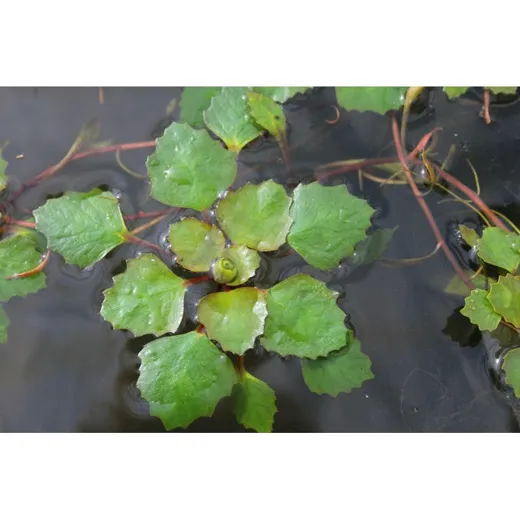
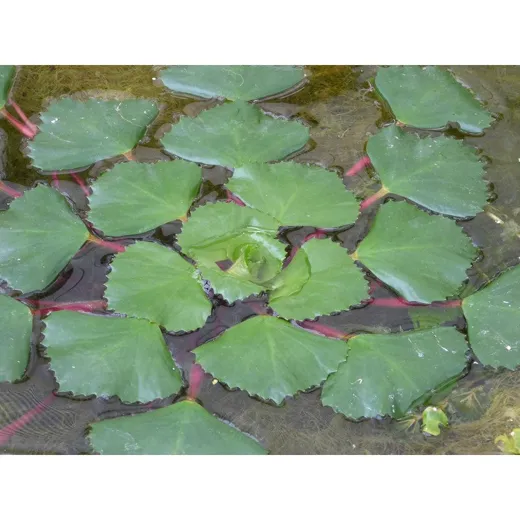
Water Chesnut Trapa Natans
Leaf cover shades the surface which helps prevent the growth of algae. Trapas reproduce by forming nuts which sink to the bottom in the autumn. These nuts are called Water Chestnuts and used in Chinese dishes.
We suggest 2-3 large floating plants per 1m²
Allow to die back naturally. In warm summers they will produce nuts that will survive at the bottom of the pond to produce new plants the following season
Features
- Pond – Floating
- Freshwater Only
- Full sun to part shade
- Spread: 10 to 20cm
- Height: 15 to 30cm
- Depth: 0cm
- Season: Spring
- Growth Rate: Medium
| Feature | Detail |
|---|---|
| Plant Type | Floating |
| Water Type | Freshwater |
| Light Requirement | Full sun to part shade |
| Spread | 10 to 20cm |
| Height | 15 to 30cm |
| Depth | 0cm |
| Season | Spring |
| Growth Rate | Medium |
FAQ
How many plants should I plant per square meter?
We suggest 2-3 large floating plants per 1m².
Do the plants produce offspring?
Yes, in warm summers they produce nuts that sink to the bottom and can grow into new plants the following season.
Can these plants survive winter?
Please contact customer service
Benjamin McDonald –
The water chestnut plants arrived healthy and spread well in my pond. The leaves cover the surface and reduced algae growth. I noticed new plants growing from the nuts in the fall. Easy to maintain and effective for pond balance.
Anna Sutherland –
Great for reducing algae. The plants float naturally and stay in place. I planted three per square meter as recommended. They grew steadily and produced nuts by late summer. Will keep them for next season.
Stephen Pullman –
I’ve had a pond for years and this was the first time I used floating plants to control algae. The coverage is excellent and the plants don’t require much care. The nuts formed and I saw new growth in the spring.