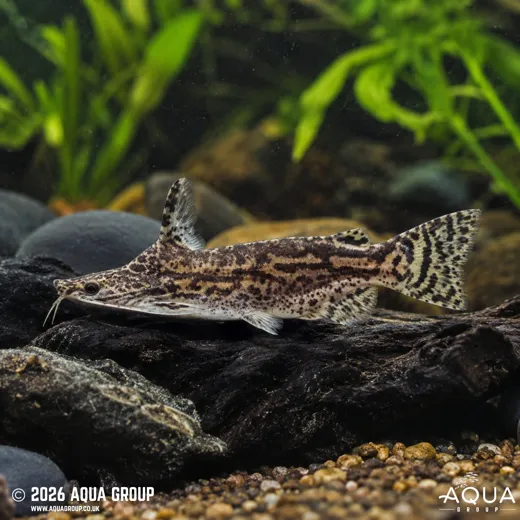
Wood Catfish (Trachelyopterus insignis)
The Wood Catfish, Trachelyopterus insignis, is a distinctive South American driftwood catfish with a cryptic brown, grey and mottled pattern that helps it blend naturally among submerged branches and roots. Still sometimes traded under the older name Trachycorystes insignis, this nocturnal catfish is a characterful choice for larger peaceful to semi-robust community aquariums. It is generally not aggressive towards fish that are too large to swallow, but it is a predatory night feeder and needs space, hiding places and carefully chosen tank mates.
Common Name:
Wood Catfish, Colombian Wood Catfish, Driftwood Catfish, Chivo Catfish.
Scientific Name (Latin):
Trachelyopterus insignis
| Species | Trachelyopterus insignis |
|---|---|
| Habitat | South American rivers and streams |
| Behavior | Nocturnal, predatory at night |
| Temperament | Peaceful to semi-robust; avoids small fish |
| Water Conditions | Warm, soft to moderately hard water, pH 6.0–7.5 |
| Space Requirement | Larger aquariums with ample hiding spots |
FAQ
What kind of tank setup is best for a Wood Catfish?
A larger aquarium with plenty of driftwood, roots, and hiding places is ideal. The catfish prefers a well-planted environment with subdued lighting and a stable temperature range.
Is the Wood Catfish aggressive toward other fish?
It is generally not aggressive toward fish too large to swallow. However, it is a nocturnal predator and may hunt smaller, slower-moving fish at night. Careful selection of tank mates is recommended.
Can the Wood Catfish live with community fish?
Yes, it can coexist with peaceful to semi-robust community fish in a sufficiently sized tank with proper hiding spots and a balanced ecosystem.

Anna Davidson –
The Wood Catfish is a unique addition to my aquarium. It blends well with the driftwood and looks natural in the dark. I’ve noticed it’s mostly active at night, hunting quietly. It doesn’t bother my larger fish, and the tank feels more dynamic with its presence.
Owen Nolan –
I bought this catfish for a community tank. It’s calm during the day and only moves at night. I added more hiding spots and now it feels secure. It’s a good choice if you have a larger tank and want a natural-looking fish.
Heather Rutherford –
The fish has adapted well to my 120-liter tank. It hides in the roots and only comes out at night. I didn’t have to worry about it eating smaller fish. It’s a quiet, elegant species that adds character to the setup.