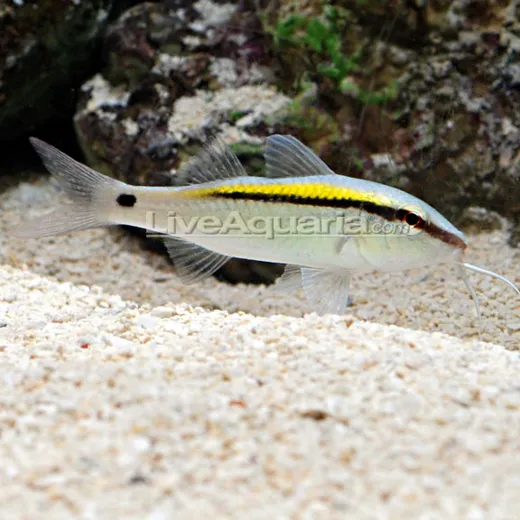
Yellow Back Goatfish
The Yellow Back Goatfish, also known as the Dash and Dot, Half and Half Goatfish, or Swarthy-headed Goatfish, is a relatively new addition to the aquarium hobby but has quickly gained popularity among enthusiasts seeking unique and active species.
These hardy fish bring energetic behavior to the aquarium bottom as they actively patrol the sand bed to forage for food. Using their sensitive barbels, they sift through the substrate to locate invertebrates, small crustaceans, and worms.
Recommended Setup
An established 125-gallon or larger aquarium with ample swimming space and rockwork is recommended. The substrate should be moderate in depth to allow the fish to use their barbels effectively.
| Feature | Detail |
|---|---|
| Common Names | Yellow Back Goatfish, Dash and Dot, Half and Half Goatfish, Swarthy-headed Goatfish |
| Size | Up to 10 inches (25 cm) in length |
| Behavior | Active bottom dweller; patrols sand bed for food |
| Feeding | Uses barbels to forage for small invertebrates and crustaceans |
| Substrate Requirement | Moderate depth sand layer for foraging |
FAQ
What is the typical size of a Yellow Back Goatfish?
The Yellow Back Goatfish can grow up to 10 inches (25 cm) in length.
What kind of substrate do they need?
A moderate depth of sand is required so the fish can use their barbels to sift through the substrate for food.
Are they suitable for beginner aquarists?
Yellow Back Goatfish are considered hardy and relatively easy to care for, making them a good choice for experienced hobbyists looking for active bottom-dwelling species.
Yvonne Bond –
The Yellow Back Goatfish adds a lot of movement to my 150-gallon tank. It spends most of its time digging in the sand, which is both entertaining and natural. I appreciate how active it is without being aggressive. The substrate depth is just right for its foraging behavior.
Faith Carr –
I was initially hesitant about adding a bottom-dwelling fish, but this one is very peaceful and curious. It uses its barbels to search for food in the sand, and it’s become a regular sight in my tank. I recommend it for tanks with a sandy bottom and plenty of space.
Rebecca Welch –
This fish is a real standout. It’s not just active—it’s engaging. I noticed it exploring new areas of the sand bed every few days. The tank feels more dynamic now. I’m happy with the choice and would recommend it to others with similar setups.