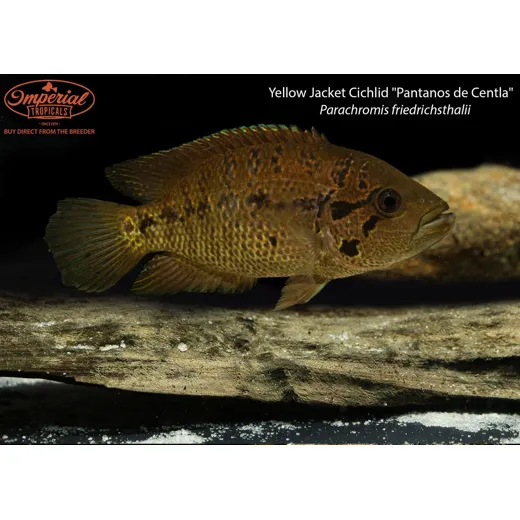
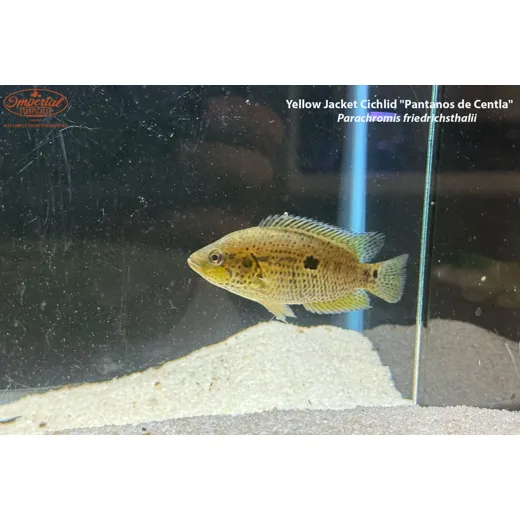
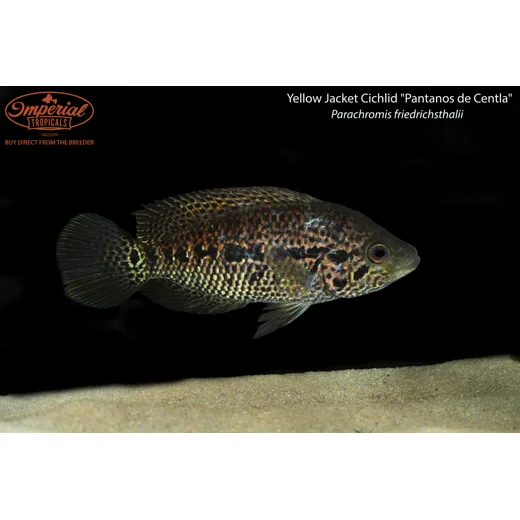
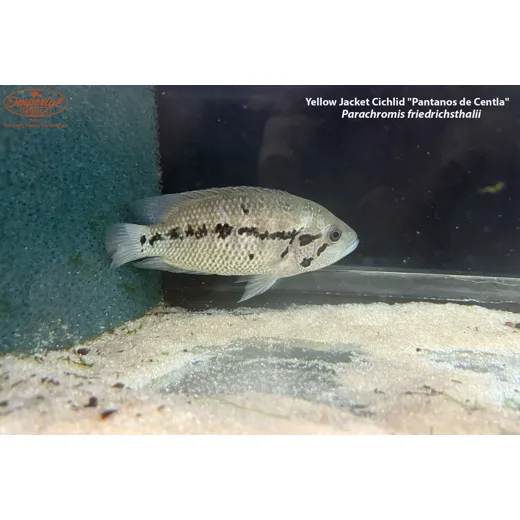
Yellow Jacket Cichlid “Pantanos de Centla”
Scientific Name: Parachromis friedrichsthalii
Yellow Jackets have a confusing history regarding their identity. They were previously known as Parachromis loisellei until 2018, when Rico Morgenstern determined that the species known as P. loisellei is actually P. friedrichsthalii. The fish commonly referred to as P. friedrichsthalii in the aquarium trade was later classified as P. multifasciatus. This species grows very large when mature and requires a minimum tank size of 100 gallons. They are known to be highly aggressive, especially during breeding periods, and should not be kept with other fish species.
These cichlids are descended from specimens collected in the Pantanos de Centla region.
| Key Features | Details |
|---|---|
| Scientific Name | Parachromis friedrichsthalii |
| Origin | Pantanos de Centla |
| Minimum Tank Size | 100 gallons |
| Aggression Level | High, especially during breeding |
FAQ
What is the correct scientific name for the Yellow Jacket Cichlid?
The correct scientific name is Parachromis friedrichsthalii.
What is the origin of this fish?
This fish is descended from specimens collected in the Pantanos de Centla.
Is this species suitable for a community tank?
No, this species is highly aggressive and should not be kept with other fish, especially during breeding.
Wendy Abraham –
Received the Yellow Jacket Cichlid from Pantanos de Centla. It’s a large fish with a striking yellow color. We have a 100-gallon tank and it’s been a few months since we added it. It’s active and territorial, so we’ve kept it alone. Very impressive in appearance, but definitely not for beginners or community tanks.
Sarah Lawrence –
The fish arrived healthy and looks like the description. We’re cautious about housing it with others. It’s aggressive and we’ve had to keep it in a large tank. The color is vibrant, but it’s not a peaceful fish.
Michael MacLeod –
This is a true specimen from Pantanos de Centla. The fish is robust and shows strong coloration. We’ve maintained a 100-gallon tank with no other fish. It’s a powerful and beautiful cichlid, though it demands a lot of space and attention.