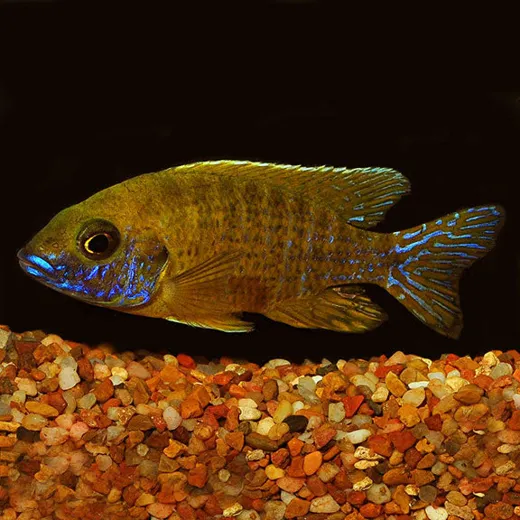
Yellow Peacock Cichlid
The Yellow Peacock Cichlid is captive-bred and sometimes referred to as the Benga Peacock Cichlid, New Yellow Regal Cichlid, Baensch’s Peacock Cichlid, or the Sunshine Peacock Cichlid. It is yellow in coloration and has the same form as the other Peacock Cichlids of the same family. The male displays the typical egg spots on the anal fin and is typically more colorful than the female, especially during breeding.
It thrives in an aquarium of at least 55 gallons with plenty of rocks for territories and a sandy bottom. Males are usually only aggressive toward their own species unless their territory is invaded. A ratio of 3 to 4 females per one male is recommended to reduce stress.
| Specifications |
|---|
| Species: Yellow Peacock Cichlid |
| Size: Up to 6 inches |
| Water Temperature: 75–82°F |
| Water pH: 6.0–7.8 |
| Aggression Level: Moderate (territorial) |
| Compatibility: Best with non-aggressive, similar-sized fish |
FAQ
What is the ideal tank size for a Yellow Peacock Cichlid?
An aquarium of at least 55 gallons is recommended to provide adequate space and territory for the fish.
Are males more aggressive than females?
Males are typically more colorful and show aggression primarily toward other males, especially if their territory is invaded. Females are generally less aggressive.
How should I set up the tank for this species?
Include plenty of rocks for territorial establishment and a sandy substrate. Maintain water temperature between 75–82°F and pH between 6.0–7.8.
Jake Hamilton –
The Yellow Peacock Cichlid is a striking fish with vibrant yellow coloring. I kept one male with four females in a 55-gallon tank. The males were calm and only showed aggression when another male approached. The rocks provided good hiding spots and the sandy bottom looked natural. Easy to maintain with regular water changes.
Ian North –
Great addition to a community tank. The fish are active and colorful, especially during breeding season. I followed the 3:1 female-to-male ratio and noticed less stress among the group. The egg spots on the male are quite noticeable and beautiful.
Bella Davies –
I’ve had this species for six months and they’ve adapted well. The tank setup with rocks and sand works perfectly. The male is very active and displays the egg spots during courtship. I appreciate the captive-bred origin—more reliable and healthier than wild-caught.