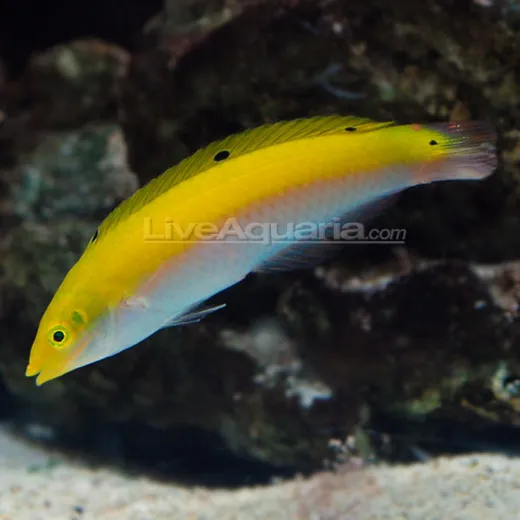
Yellow & Purple Wrasse
The Yellow & Purple Wrasse, also known as the White or Four Spot wrasse, originates from the invertebrate-rich waters of Sri Lanka. Juveniles display a yellow top half with white to purple lower half. As the fish matures, the yellow fades to a beautiful pink coloration.
This species requires a 50-gallon or larger aquarium with ample live rock and a few inches of sand for hiding and grazing. It is known to be a jumper, so a tightly fitting canopy is essential. The fish feeds on fireworms and pyramidellid mollusks.
| Key Features |
|---|
| Origin: Sri Lanka |
| Adult Coloration: Pink |
| Size: Medium to large |
| Feeding: Fireworms, pyramidellid mollusks |
| Behavior: Active, may prey on invertebrates |
FAQ
What is the color change pattern of the Yellow & Purple Wrasse as it matures?
Juveniles have a yellow top half and white to purple lower half. As the fish matures, the yellow fades to a pink coloration.
Is the Yellow & Purple Wrasse suitable for a reef aquarium?
Exercise caution. The species may feed on feather dusters, ornamental shrimp, and other invertebrates, making it unsuitable for a reef tank without careful management.
What tank size and setup are recommended?
A 50-gallon or larger tank with plenty of live rock and a few inches of sand bed is recommended for proper hiding and grazing.

Lily Lawrence –
The fish looks beautiful and changes color nicely over time. I noticed the pink shift after a few months. It’s active and needs a secure canopy since it jumps. I keep it in a 60-gallon tank with live rock and sand. Watch out for invertebrates though—some of my feather dusters were missing after a few weeks.
Angela Hodges –
Great addition to my marine setup. The juvenile stage was very colorful with yellow and purple markings. After six months, it turned pink and looks stunning. I added a tight canopy and it hasn’t jumped once. Feeds well on fireworms and seems happy in the tank.
Melanie Hodges –
It’s a nice-looking fish, but I lost a few small shrimp and feather dusters. I didn’t expect it to eat invertebrates. I now monitor the tank more closely. Still, the color change is impressive and it’s active and engaging.