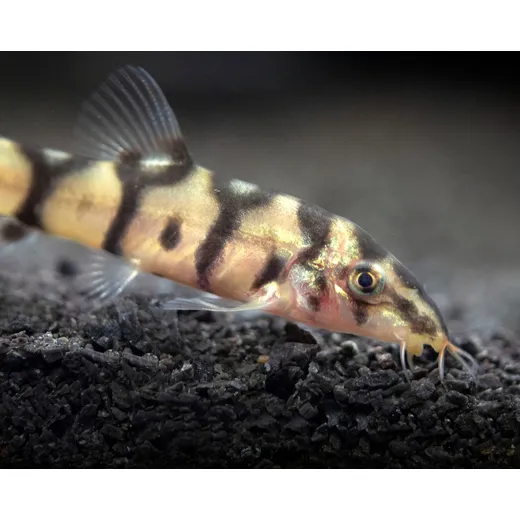
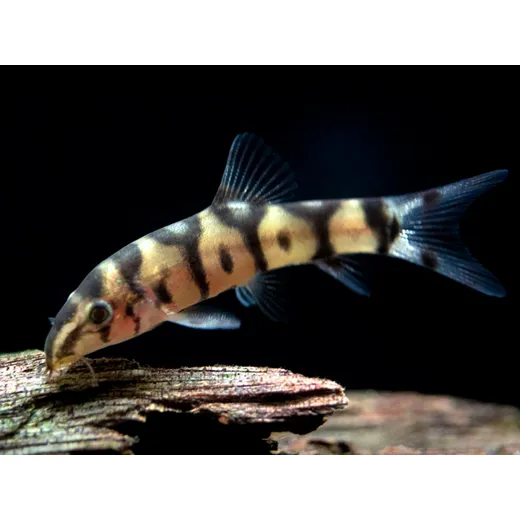
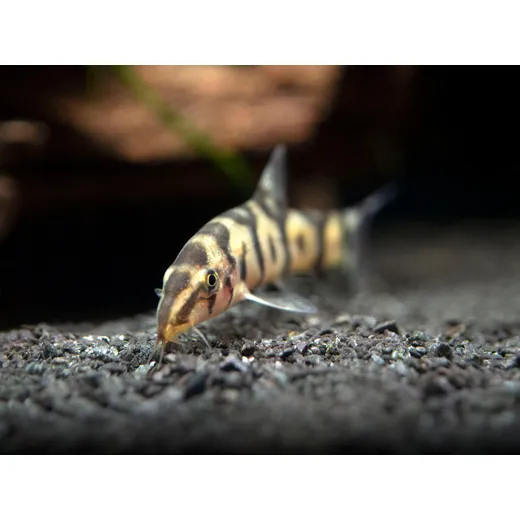
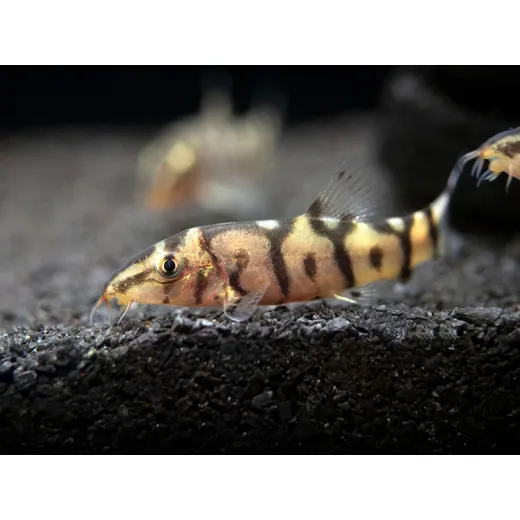
Yo-Yo Loach (Botia almorhae) – Aquatic Arts
The Yo-Yo Loach is a popular aquarium species that displays fascinating group behavior and beautiful coloration!
The Yo-Yo Loach (Botia almorhae), also known as the Pakistani Loach (even though it is not from Pakistan), is native to the Ganges River system in Northern India. Named for its juvenile color pattern that appears to spell “Yo Yo,” this species is a very active, inquisitive fish that is very gregarious in nature. As it matures, its black and gold coloration develops into a more complex, reticulated maze-like pattern. It is compatible with many other fish and plants as well.
The Yo-Yo Loach is an omnivorous species requiring a diet of meaty foods regularly supplemented with vegetable and fruit matter. It will often accept high quality commercial fish foods.
| Specification | Value |
|---|---|
| Scientific Name | Botia almorhae |
| Origin | Ganges River system, Northern India |
| Adult Size | 3-4 inches |
| Temperament | Gregarious, active, peaceful |
| Diet | Omnivorous (meat and plant-based foods) |
| Water Temperature | 72-78°F |
| Water pH | 6.0-7.5 |
FAQ
What is the typical size of a mature Yo-Yo Loach?
A mature Yo-Yo Loach typically grows to 3-4 inches in length.
Is the Yo-Yo Loach suitable for a community aquarium?
Yes, the Yo-Yo Loach is compatible with many other fish and plants and is well-suited for community tanks.
What kind of diet does the Yo-Yo Loach require?
The Yo-Yo Loach is omnivorous and requires a diet of meaty foods supplemented with vegetable and fruit matter. It will accept high-quality commercial fish foods.
Connor Black –
The Yo-Yo Loach is a lively and colorful addition to my tank. After introducing two of them, the group behavior is fascinating to watch. They seem to enjoy each other’s company and stay active throughout the day. The color pattern changes nicely as they mature.
Sophie Walker –
I bought this loach for my beginner-friendly aquarium. It’s easy to care for and gets along well with my other fish. The coloration is striking, especially in the juvenile stage. I’ve noticed it’s very curious and often explores the tank.
Richard Mackenzie –
The fish arrived healthy and active. They have adapted well to the tank conditions. The maze-like pattern on their bodies is quite unique and adds visual interest. I appreciate the detailed care notes included with the product.